Exhibition (Select Works)
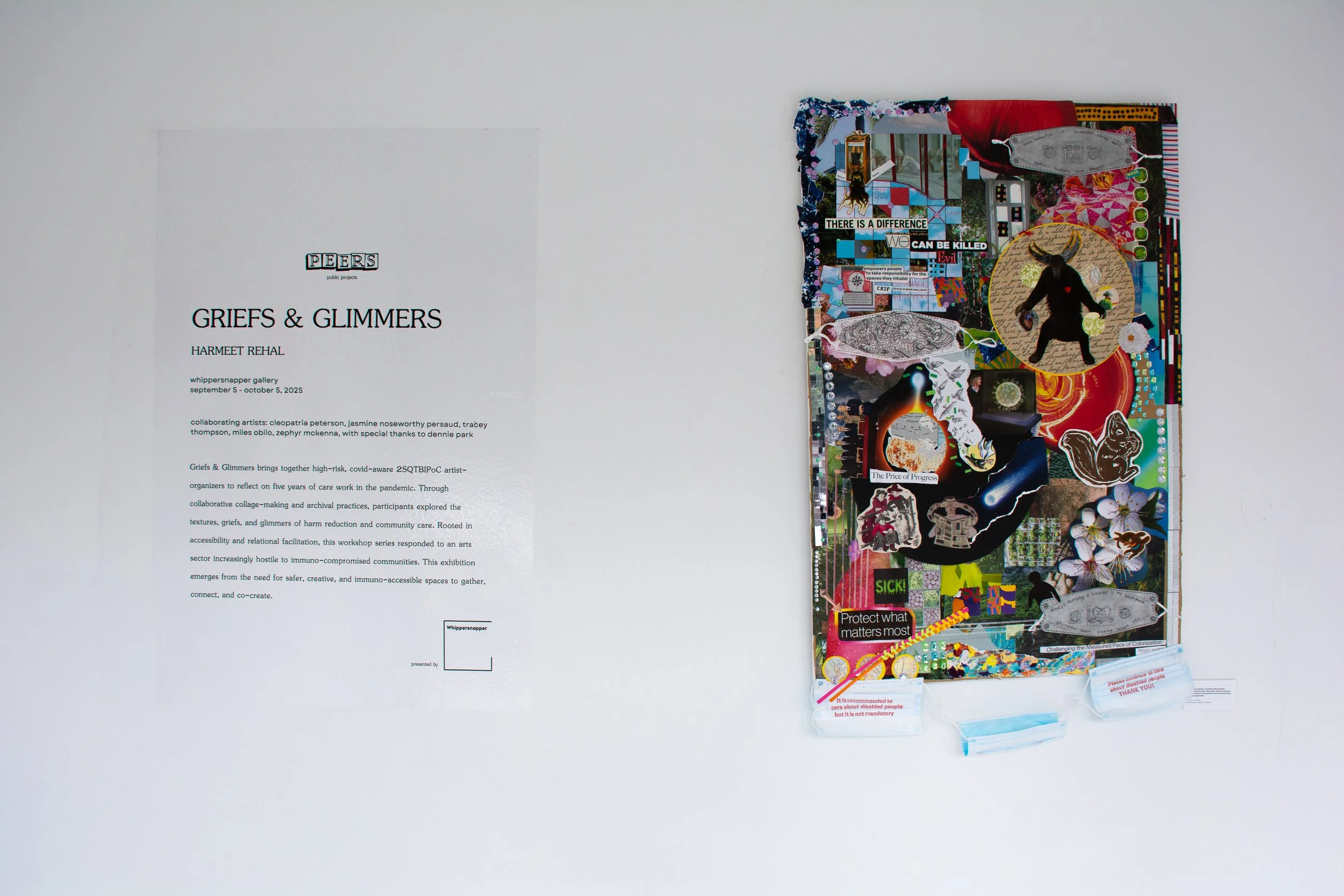
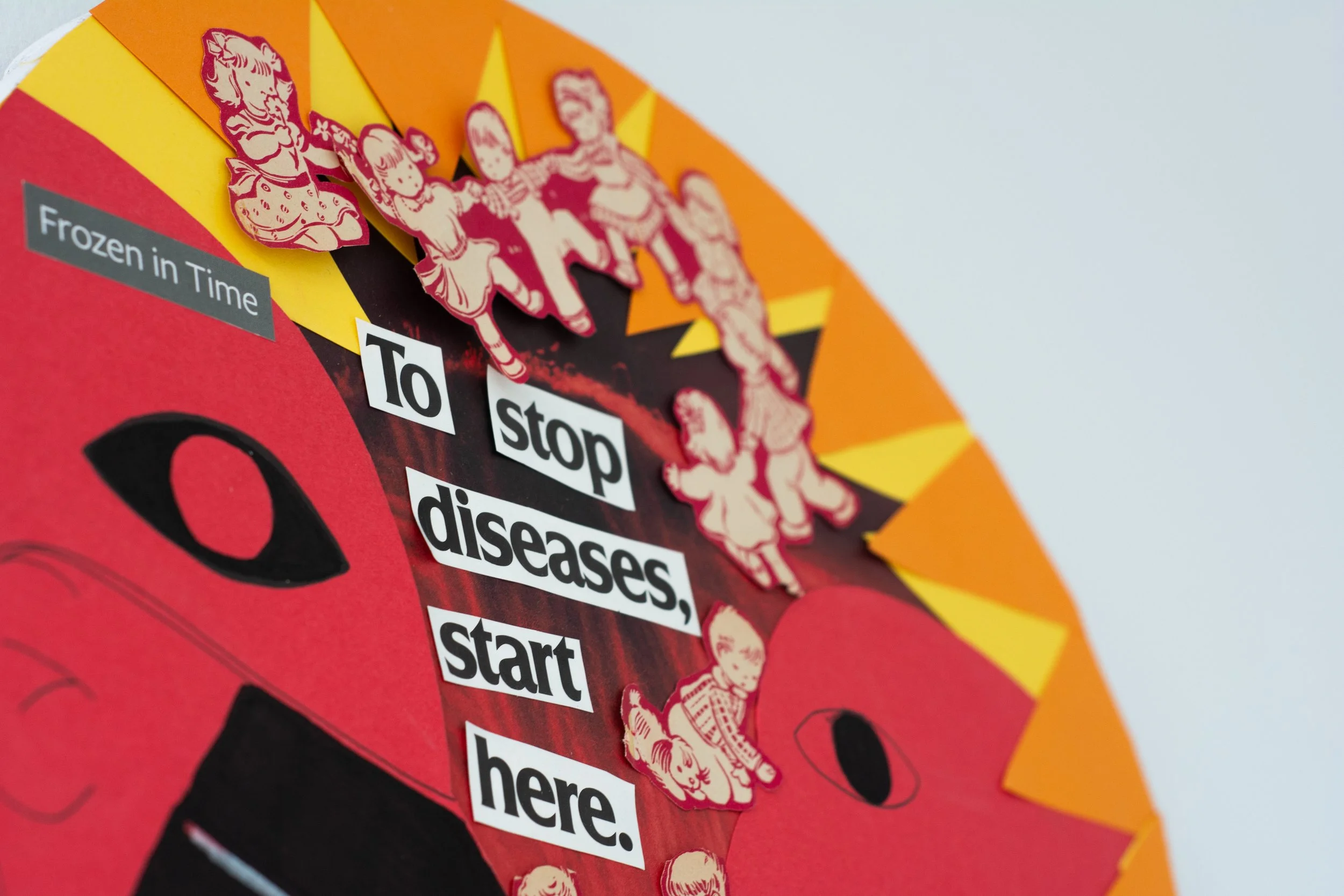
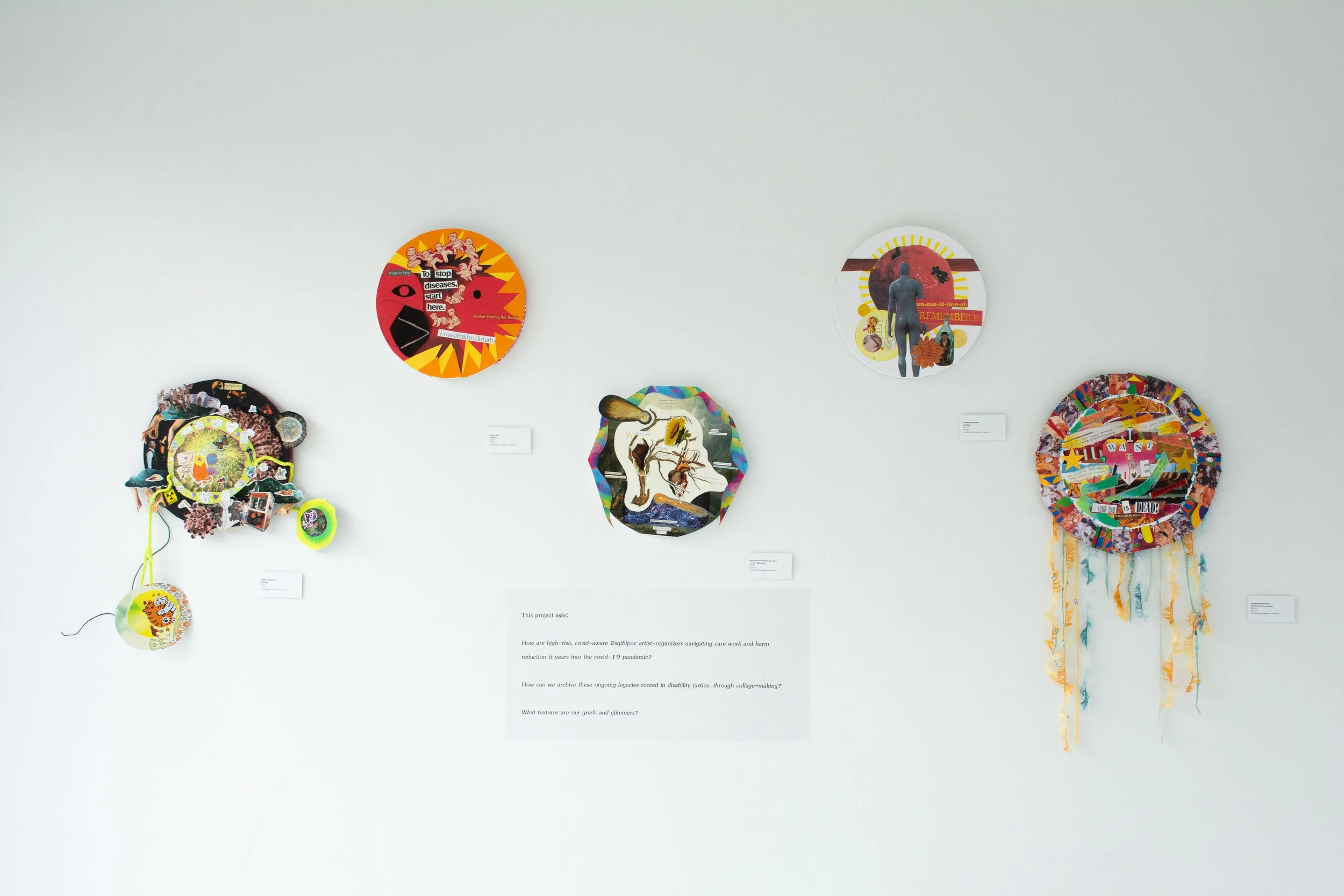
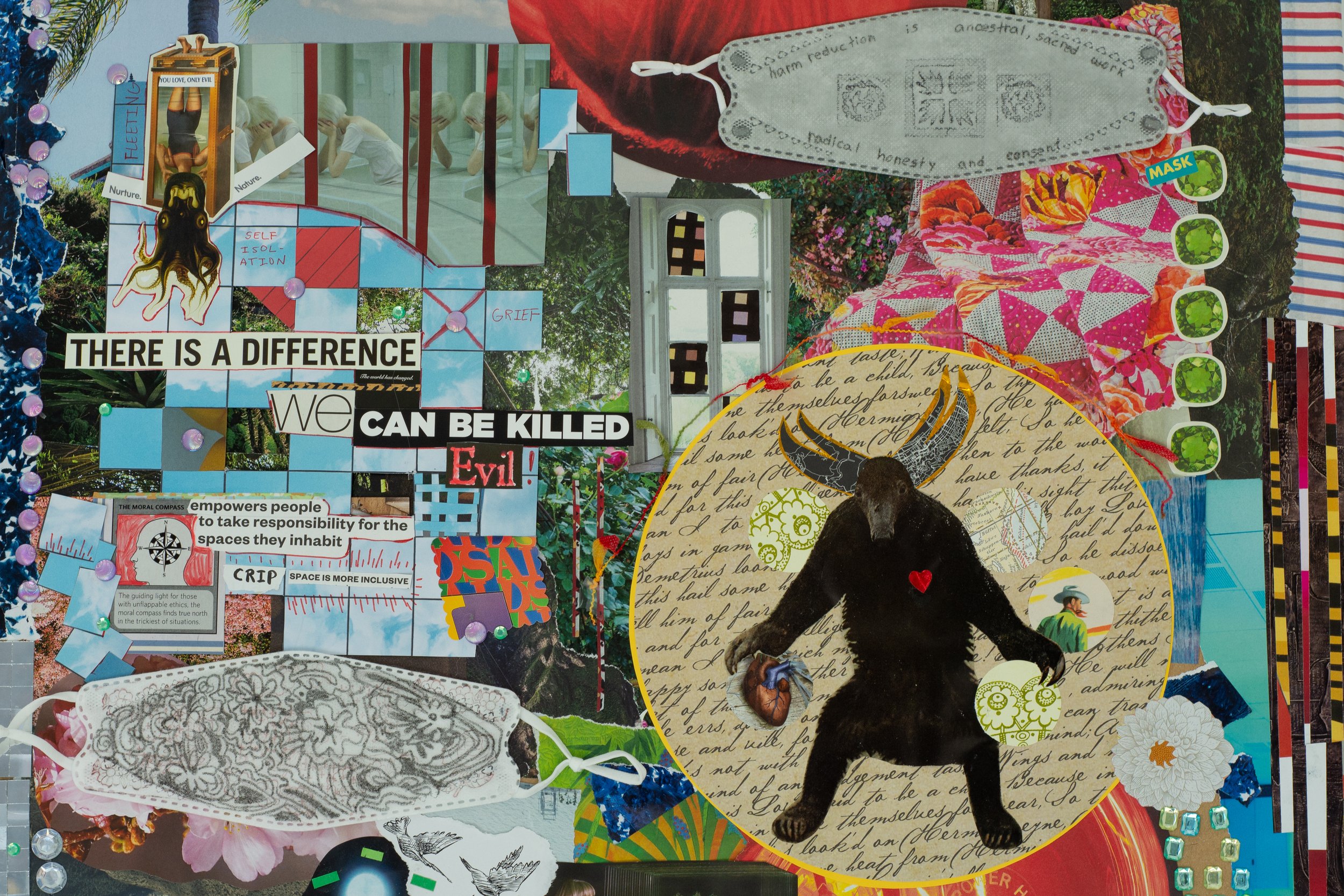
Griefs and Glimmers (2025) - Whippersnapper Gallery
Through Griefs & Glimmers, Harmeet brought together covid-aware 2SQTBIPoC artist-organizers (Cleopatria Peterson, Jasmine Noseworthy Persaud, Tracey Thompson, Miles Obilo, and Zephyr McKenna) to reflect on five years of care work in the pandemic. Through collaborative collage-making and archival practices, collaborators explore the textures, griefs, and glimmers of harm reduction and community care. Rooted in accessibility and relational facilitation, this workshop series/residency responds to an arts sector increasingly hostile to immuno-compromised communities. The project culminates in a group exhibition honouring the need for safer, creative, and immuno-accessible spaces to gather, connect, and co-create.
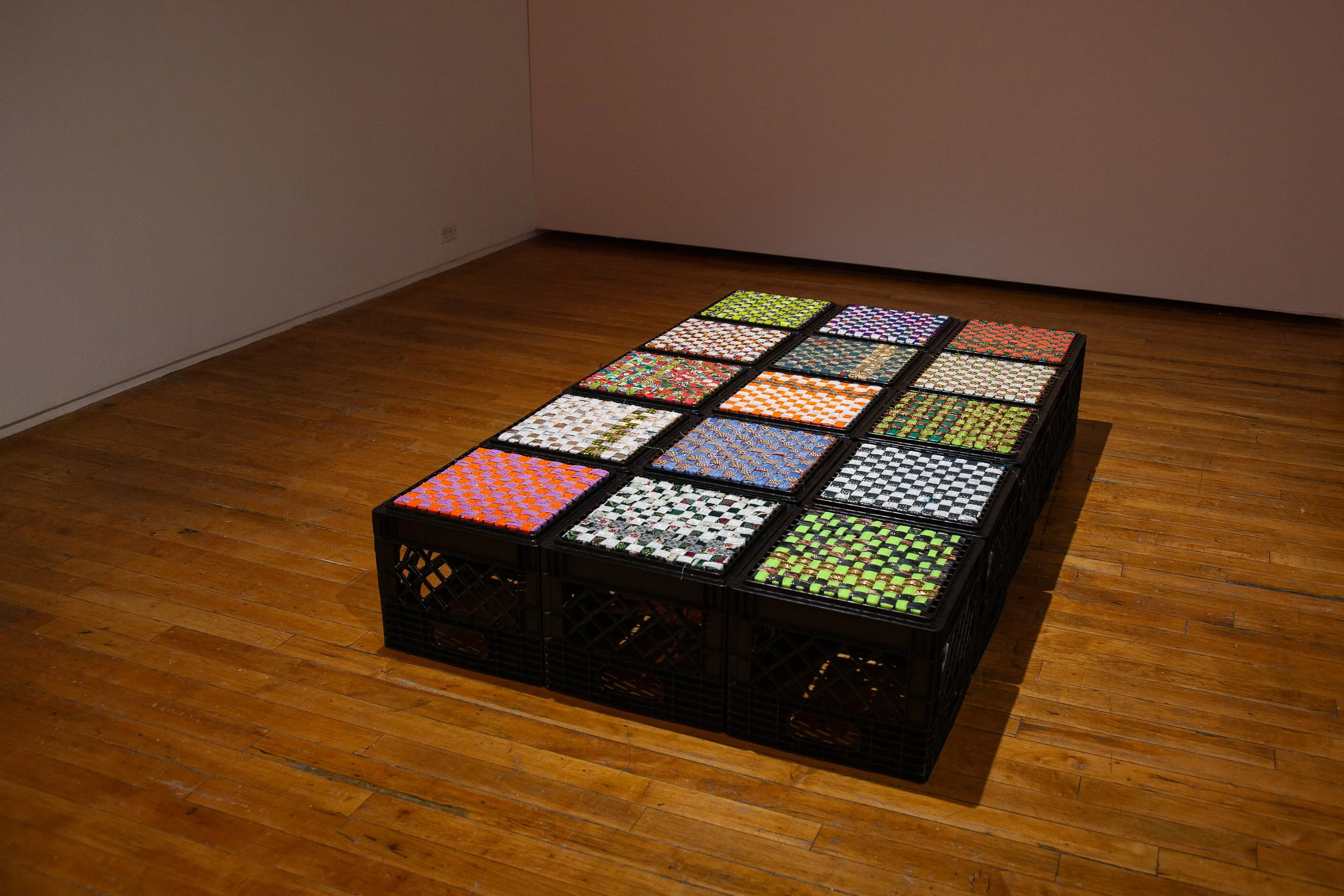
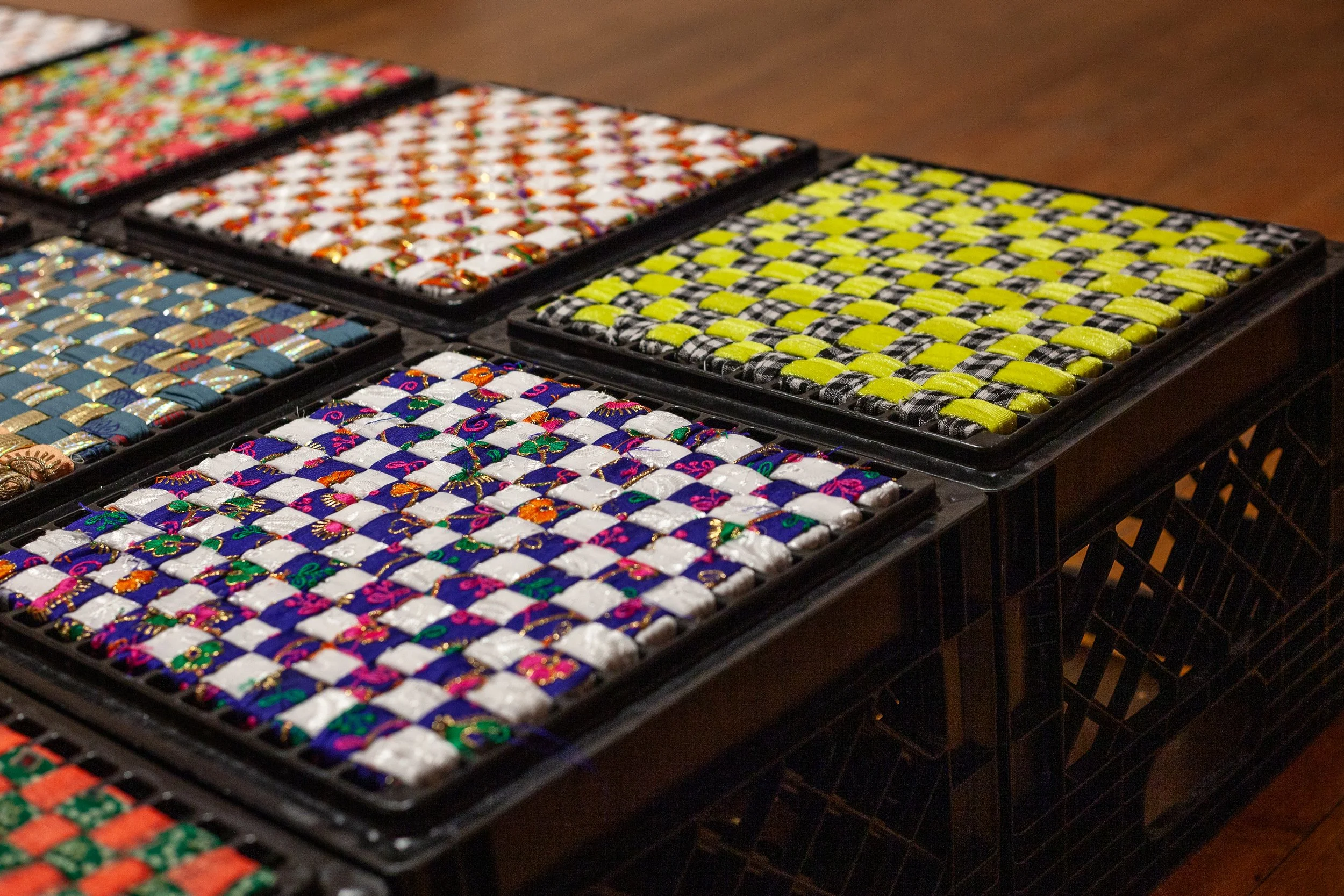
“ਮੰਜਾ/Manjas as Mobility Aids” in there is always something better (2024) - A group show curated by Salima Punjani at Tangled Art Gallery
ਮੰਜਾ/Manjas are Panjabi day beds traditionally made with a simple wooden frame and hand-woven, colourful rope. In contrast to western spatial design, Manjas are found in private and public shared spaces, allowing rest to be collective and ongoing. Harmeet grew up witnessing milk crates in factories, cleaning supply closets, kitchen fridges, alleys, and flea markets becoming supports during hours of under-valued work. This is a type of working-class and racialized “access” hacking that recalibrates the normative design and purpose of milk crates into an access tool/mobility aid. Harmeet brings all these threads together, and re-imagines Manjas through milk crates that are binded together with jhute to form a daybed, with softened tops with woven panjabi textiles that become a love-letter to invisibilized labour.
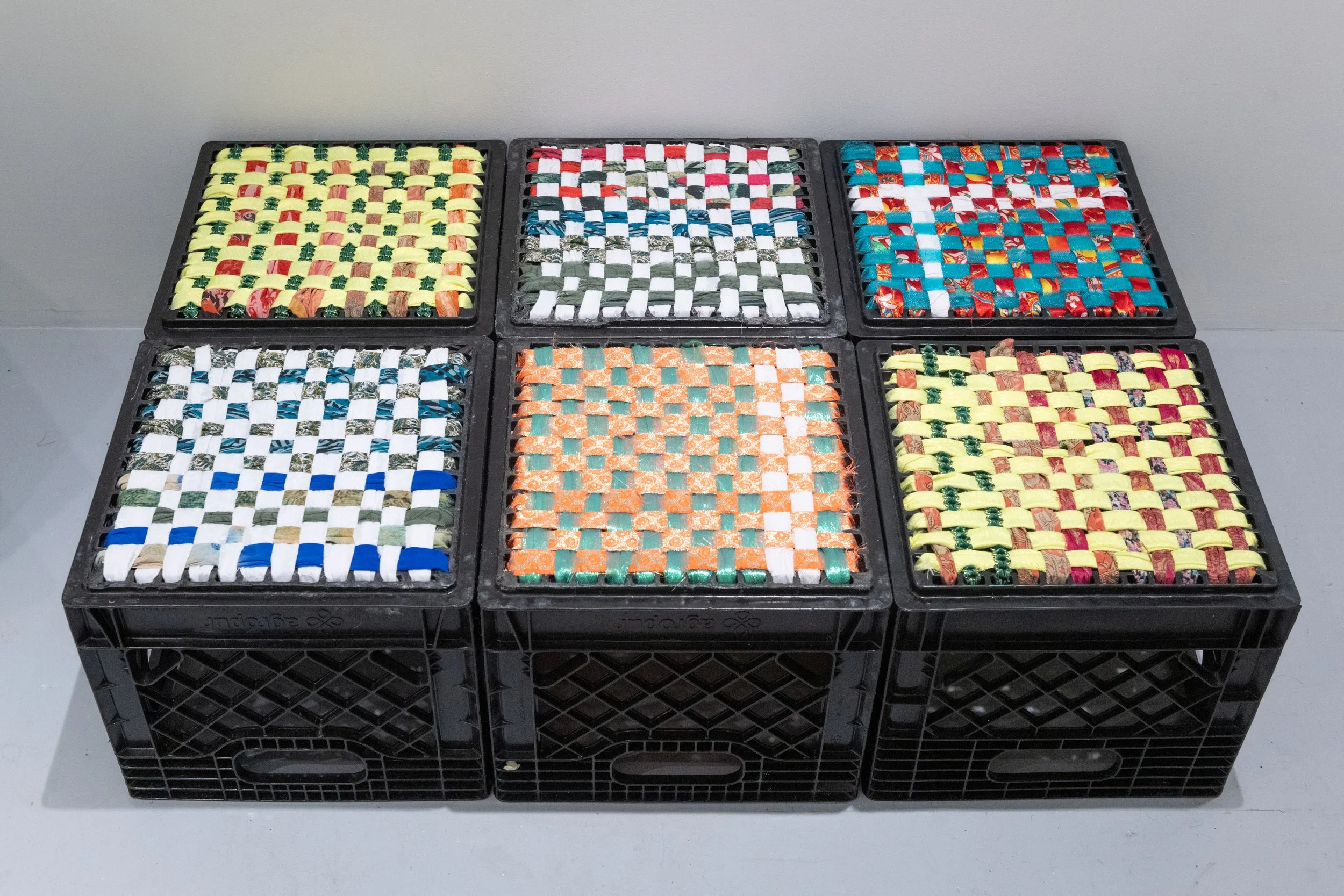
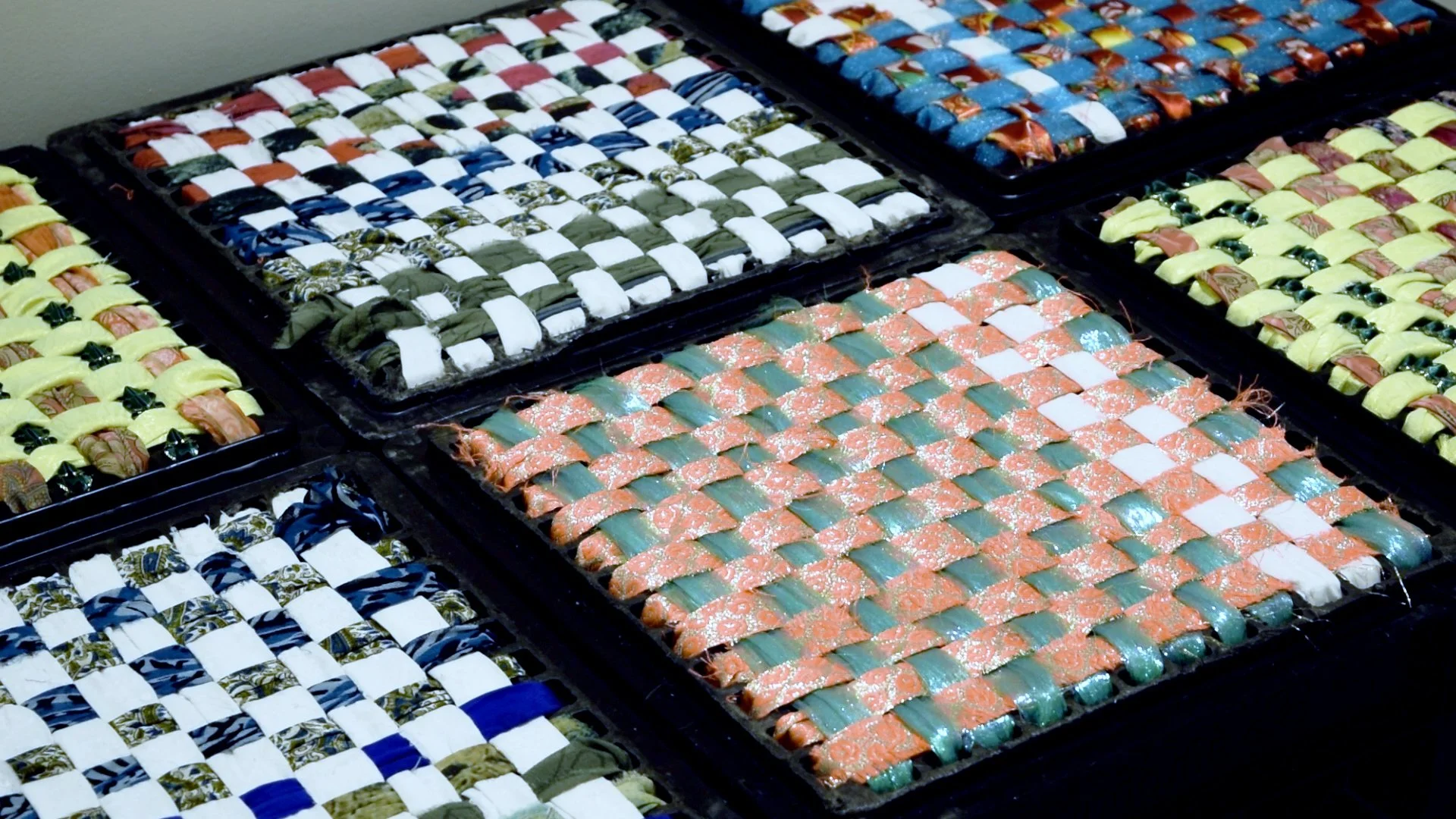
“ਮੰਜਾ/Manjas as Mobility Aids” in wherever you are is where i want to be (2023) - A group show curated by Sarah-Tai Black at Workman Arts’ Rendezvous With Madness Festival
747 Project with Pree Rehal (2023) - National AccessArts Centre x Won Lee Studio Artist Residency
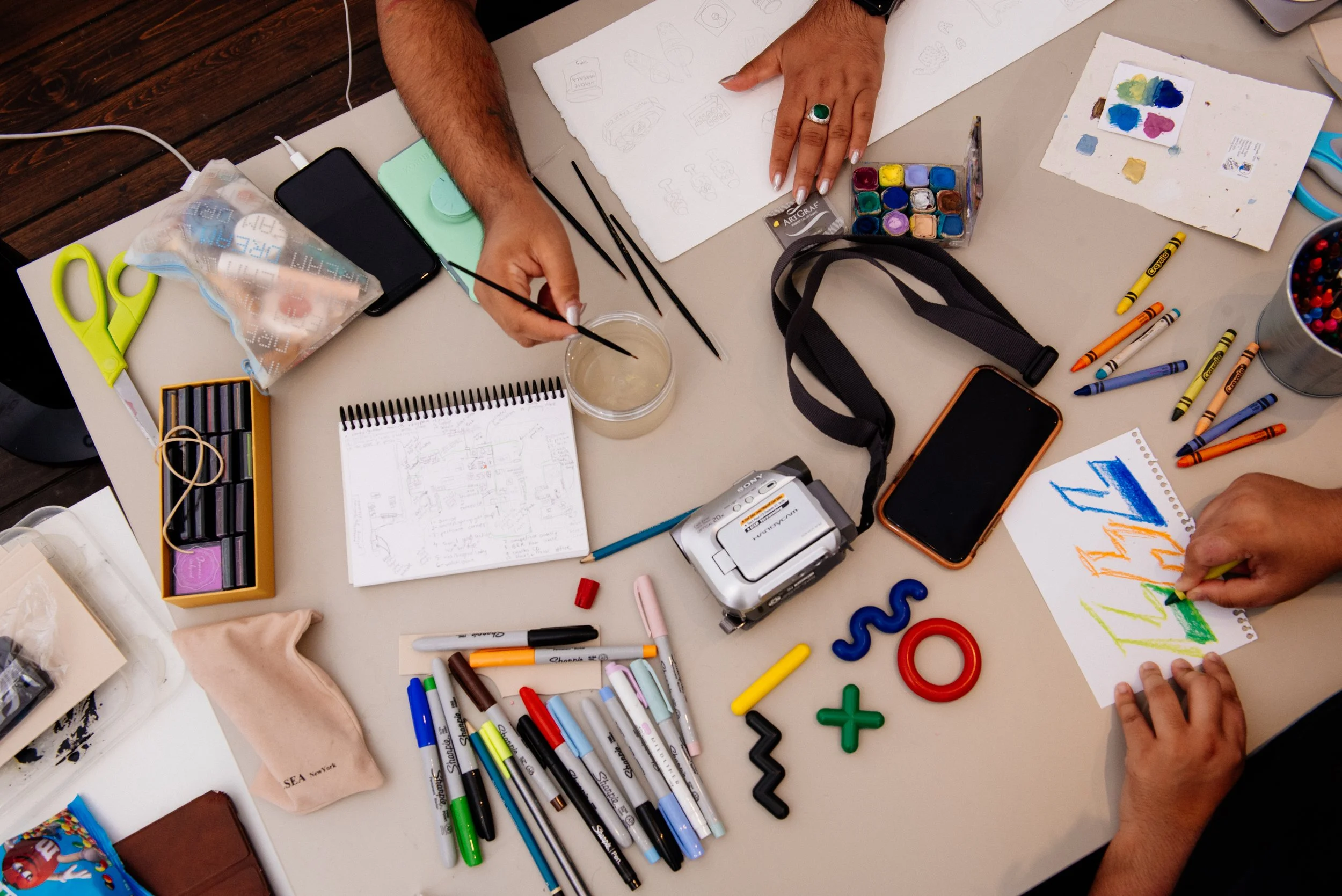
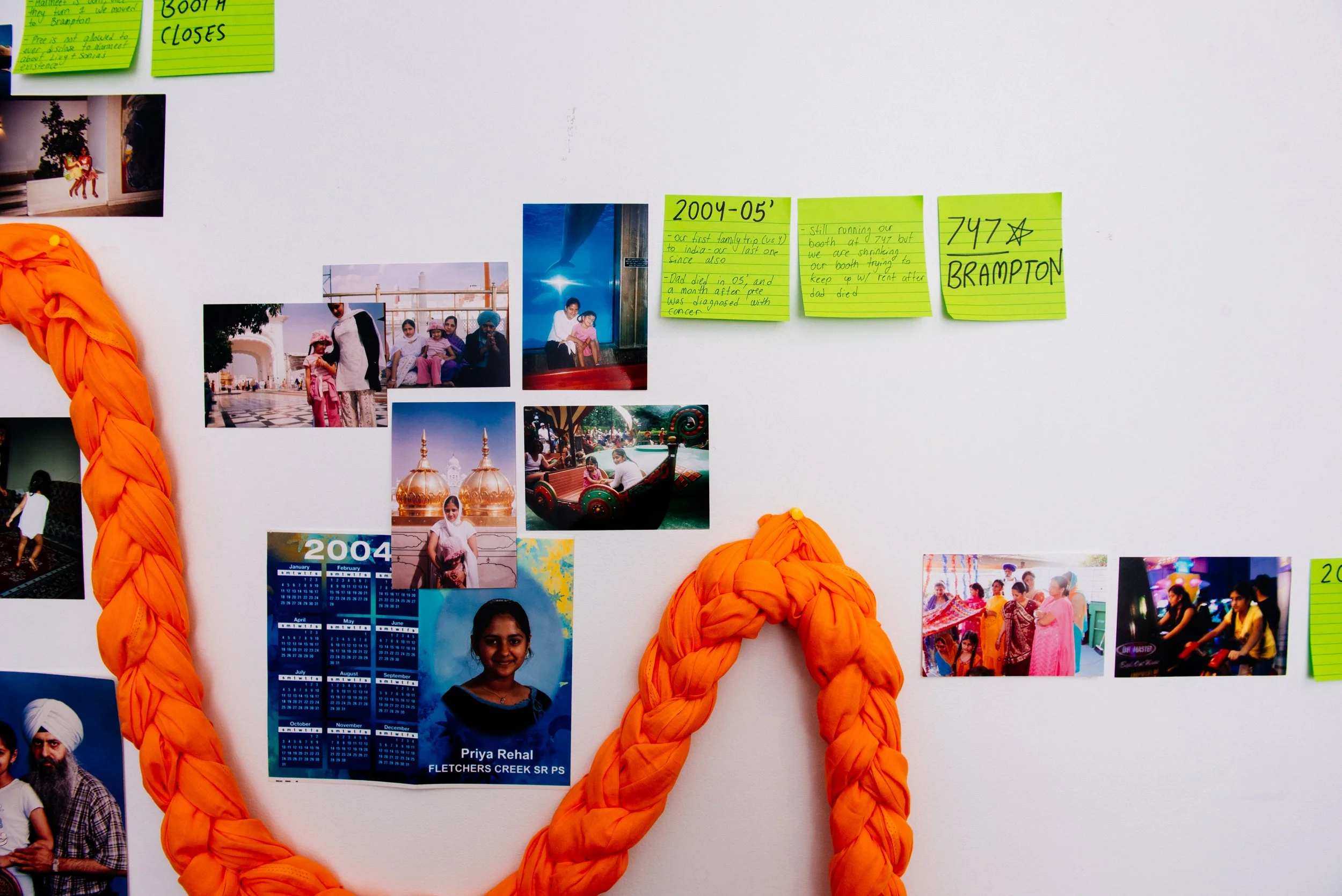
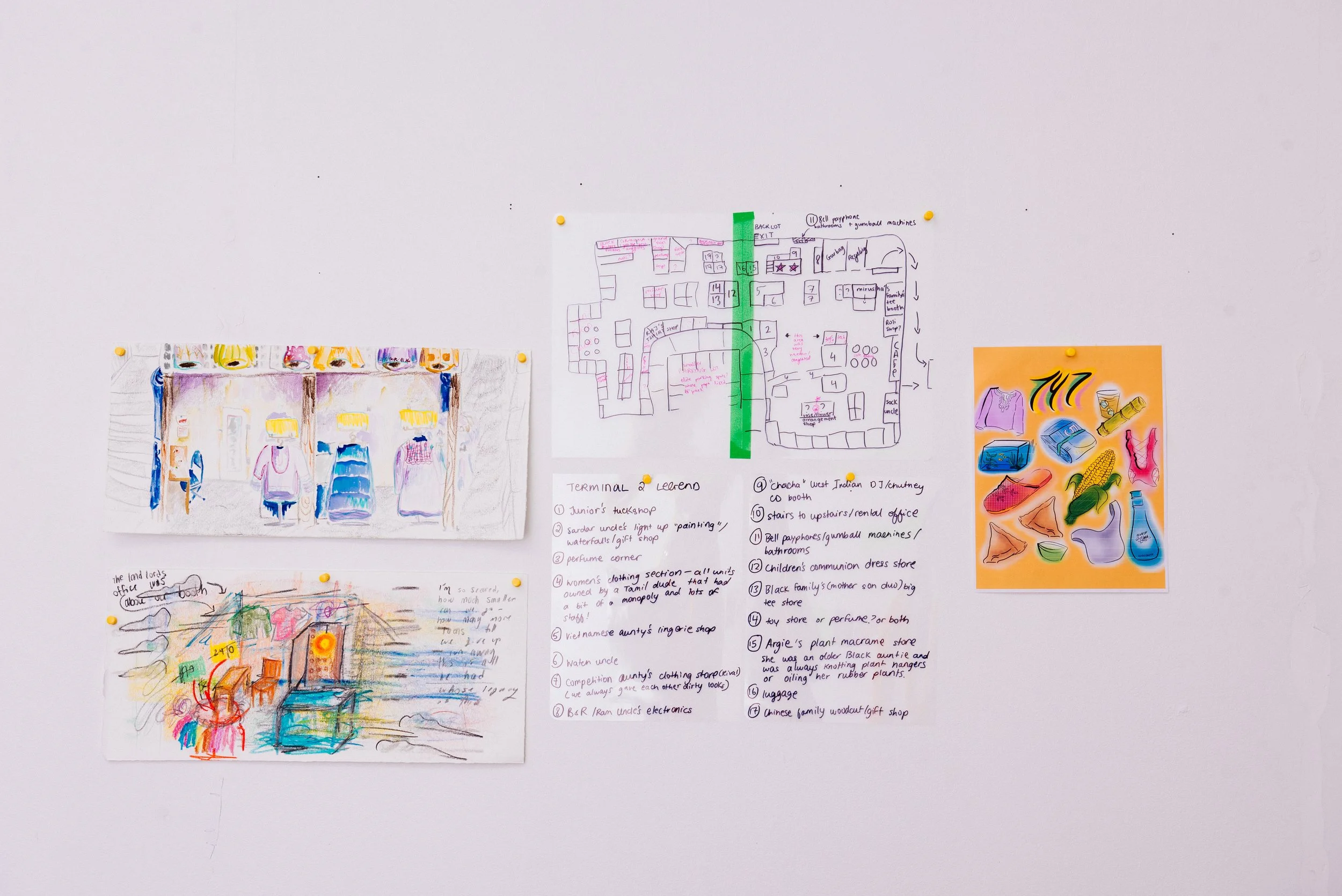
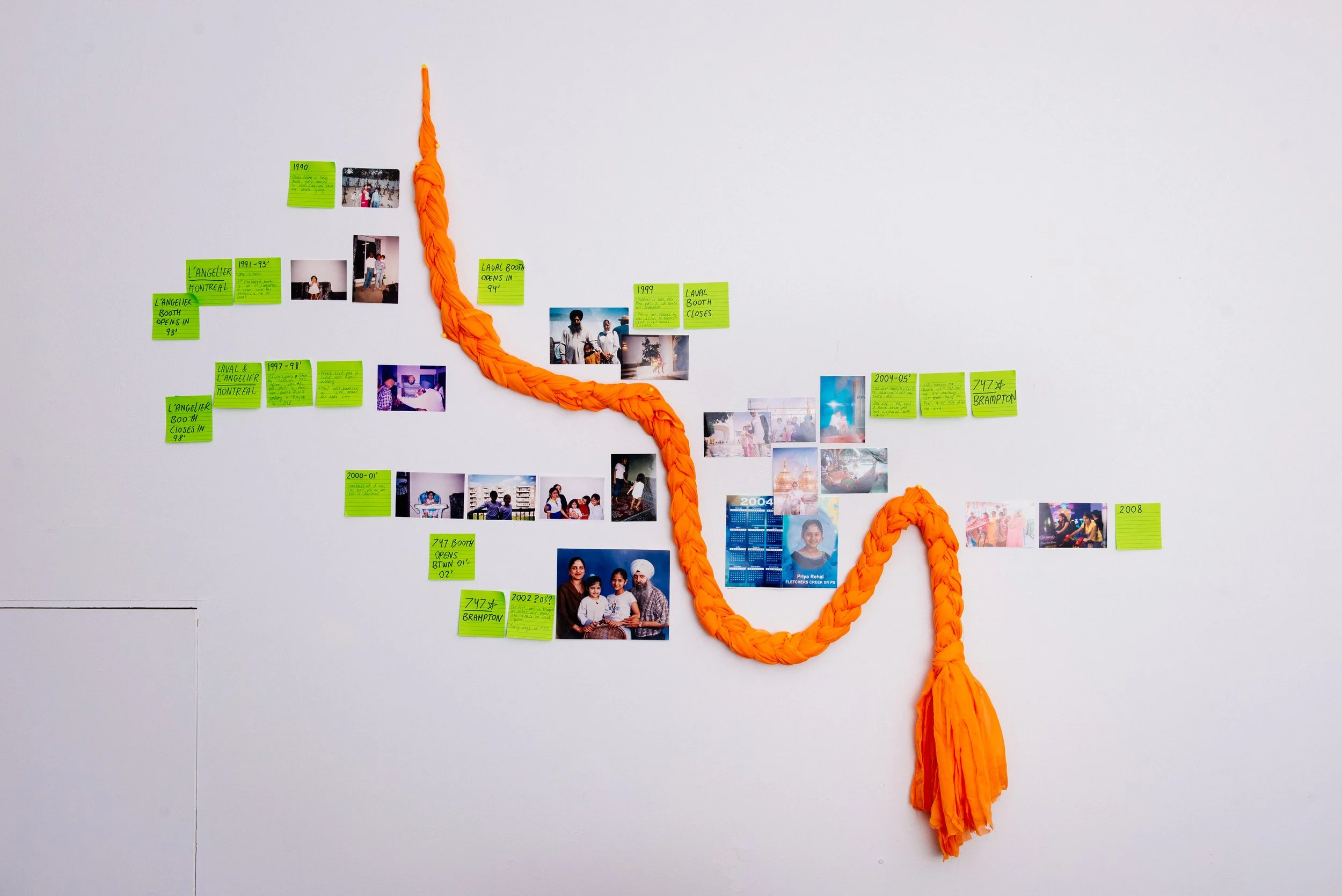
Through an artist residency, we explored 747 Flea Market, a once-vibrant site in Brampton that held deep cultural and personal significance for us as siblings. The market, frequented by working-class and racialized vendors, was a space of aspiration and survival, where our family had a booth. After our father’s passing in 2006, we were forced to leave when our family claimed bankruptcy, and, years later, we were barred from ever returning. Prior to this residency we discovered that the market was demolished to make way for an Amazon factory, a loss that reignited our need to preserve its memory.
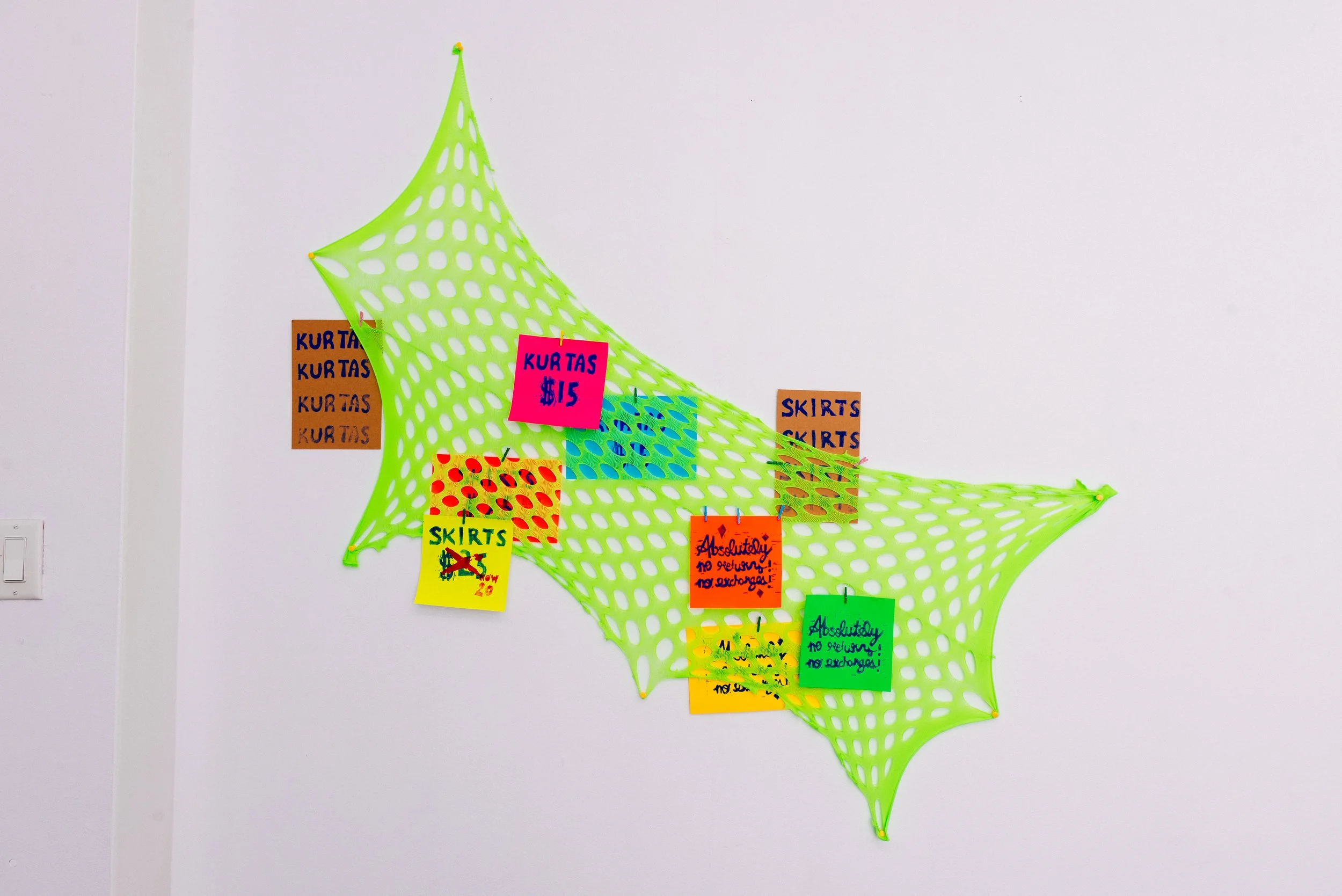
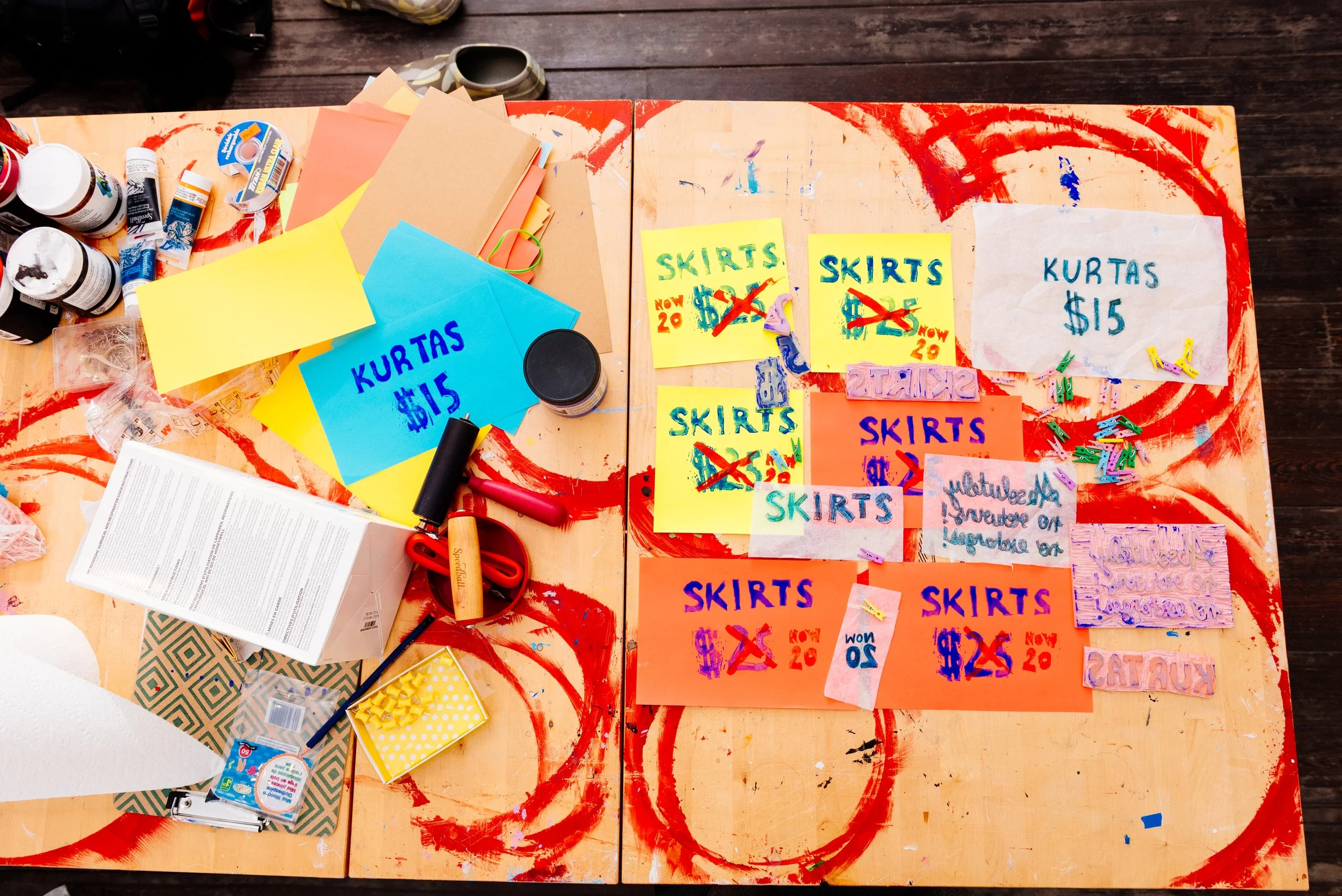
This exploration was an act of remembrance and resistance, using art to reflect on the queer, working-class, and disabled histories of 747. The erasure of these histories through gentrification is often overlooked, especially in suburban contexts, but our works aimed to center and honor these lived experiences. The pieces we created combined illustration, digital media, textile arts, lino printed re-imaginings of our hand-painted signs and a selection of diasporic, family photos to evoke the sensory experience of the market. The work includes a map of the flea market, drawn from our memories and interviews, and a found voyeuristic and haunting film that documents the demolition.
Through this project, we hoped to offer a visual tribute to the people, the struggle, and the everyday pleasures of the 747 Flea Market—a space that was more than just a market, but a home for the dreams, desires, and labor of our communities.